Artist Spotlight
Counting the Rings: Nguyen Minh Tri on Grief, Drag, and Making Art From the Body
Tonee turns aluminium wire, yarn, and a rotting pumpkin into portraits of a body that was never singular, questioning who gets to feel clean enough for a gallery, or for themselves.
Nguyen Minh Tri, who goes by Tonee, does not make work that stays behind glass. Across sculpture, drawing, and a rotting pumpkin left to decay on a gallery floor, they keep returning to the same question: what does it mean to be a portrait when you have always felt like you are not clean enough for the room you are standing in?
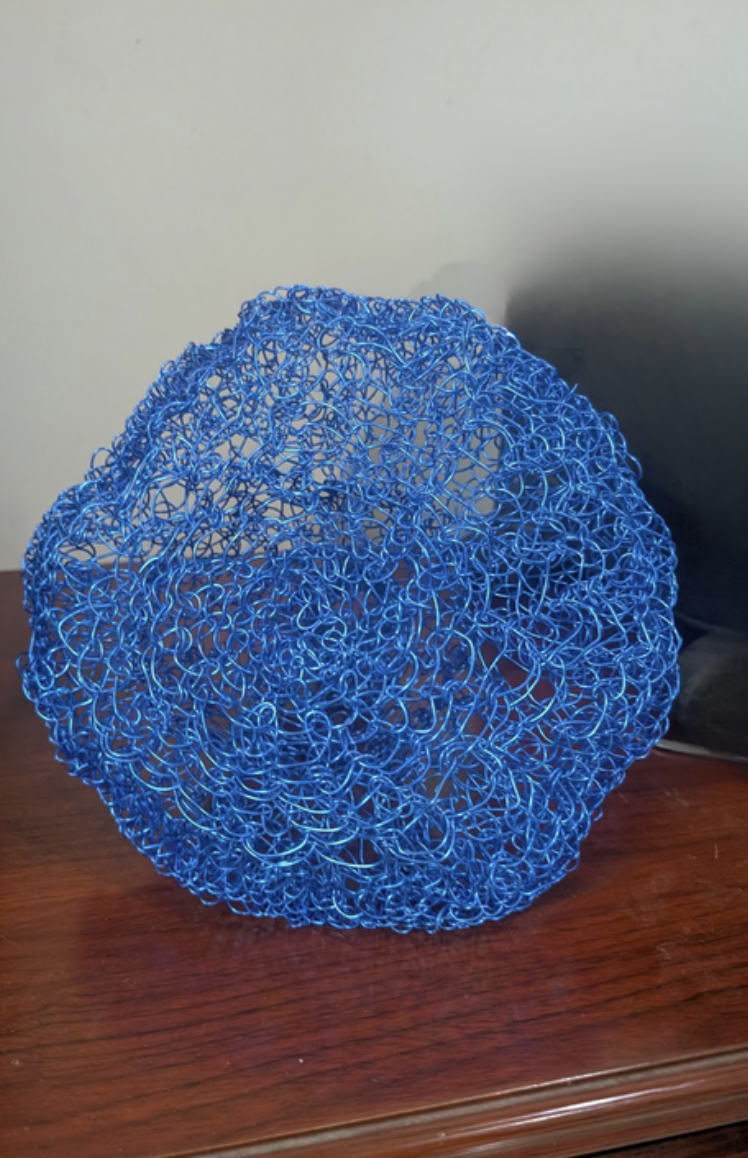
That question runs literally through Cocoon, a shell of aluminium wire, the same material bonsai growers use to bend a tree into a shape someone else has chosen for it. Tonee reimagines that bond as the body itself. "I turn the self-projections, insecurities, and masks we adopt to navigate the world, into an actual shell," they say. "The sculpture is the extension of one's internal struggle. Are the walls you built concrete, or permeable?" Viewers are invited to bend the wire and wear it, turning the audience into a living extension of the work: "The body is never singular. It is a collaborative performance between the physical self and the external structures we choose to inhabit."
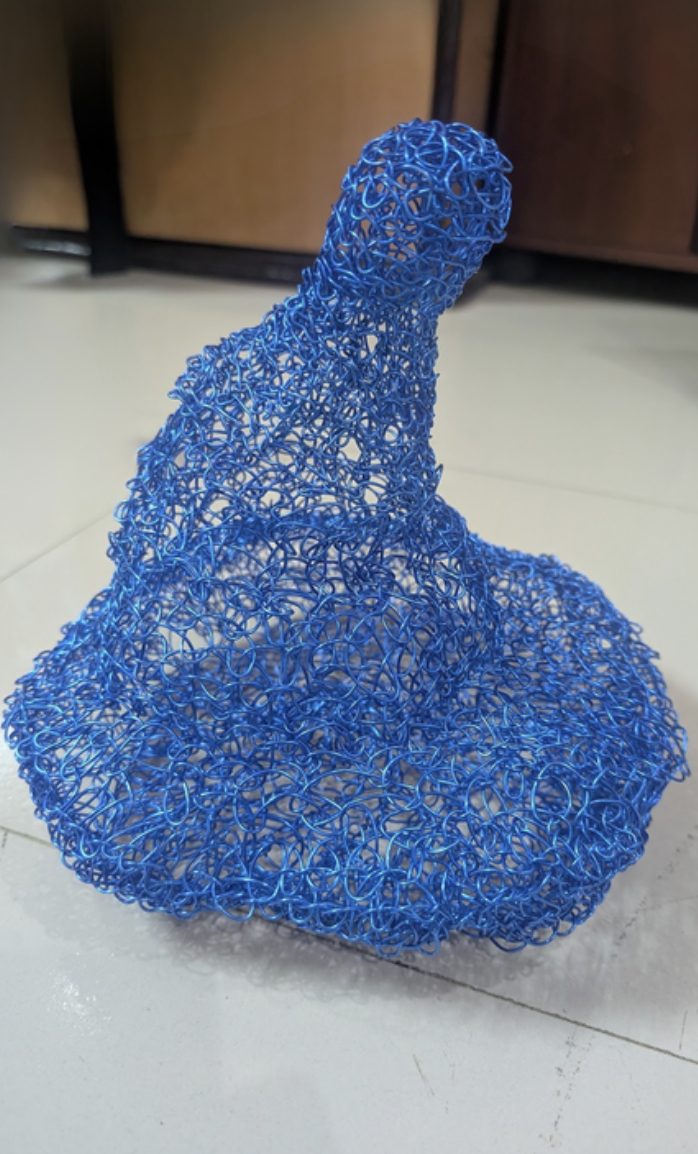
Tonee returns to that same wire, coiled tighter, in Meditation, made after their grandfather passed away. "A lot of responsibility is placed on me as a grandson," they say. "He was a devoted Buddhist follower, so he spent a lot of time meditating. I think of the empty space between the blue metal as my struggle to fulfill his position. I am using that wire to create my reminiscence of him, sitting, waiting, meditating."
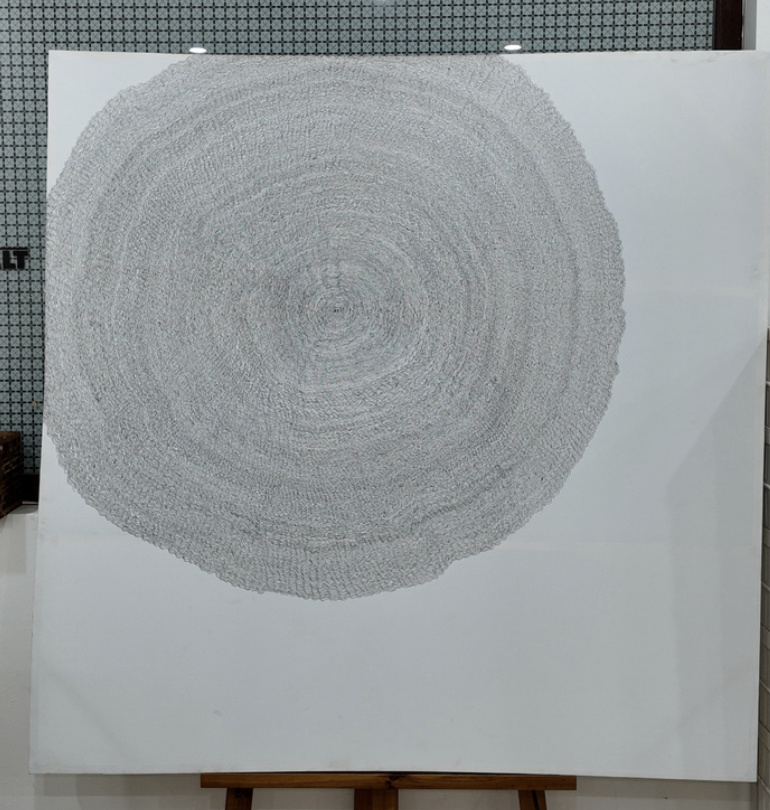
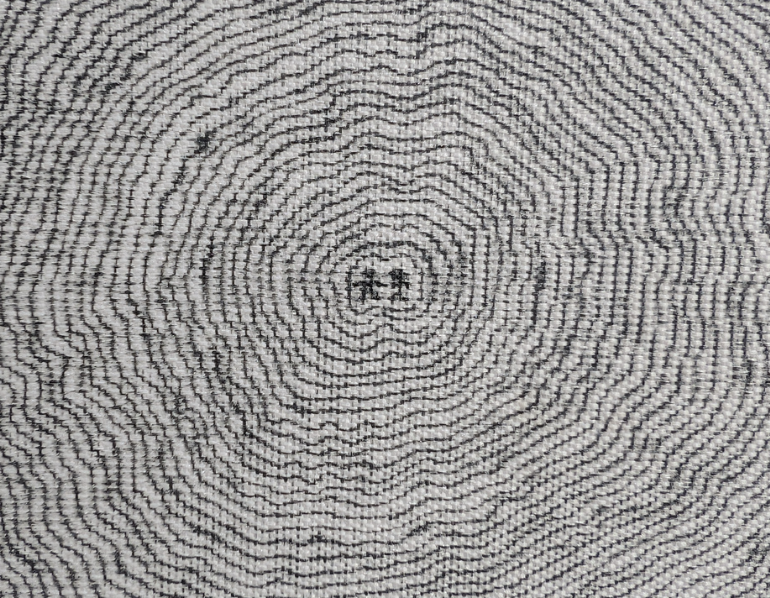
In Dendrochronology of A Relationship, an ongoing drawing built ring by ring in black Pilot V5 pen, Tonee treats a canvas like a felled tree. "Annular rings of a tree can tell so much about its life; how much water, trauma, how hot it was during each period," they say. "In order for us to count the rings, a full or partial cut of the tree must be done. A relationship is like that sometimes, we can only see the full picture when a part of it, or all of it, is being diced up and observed." The ink deliberately spills past the flat canvas onto its edge. "I think of love and relationship in that sense also, unstoppable and forever growing." They are open to letting the piece keep growing outward, too, inviting viewers to add rings of their own.
“The body is never singular. It is a collaborative performance between the physical self and the external structures we choose to inhabit.”
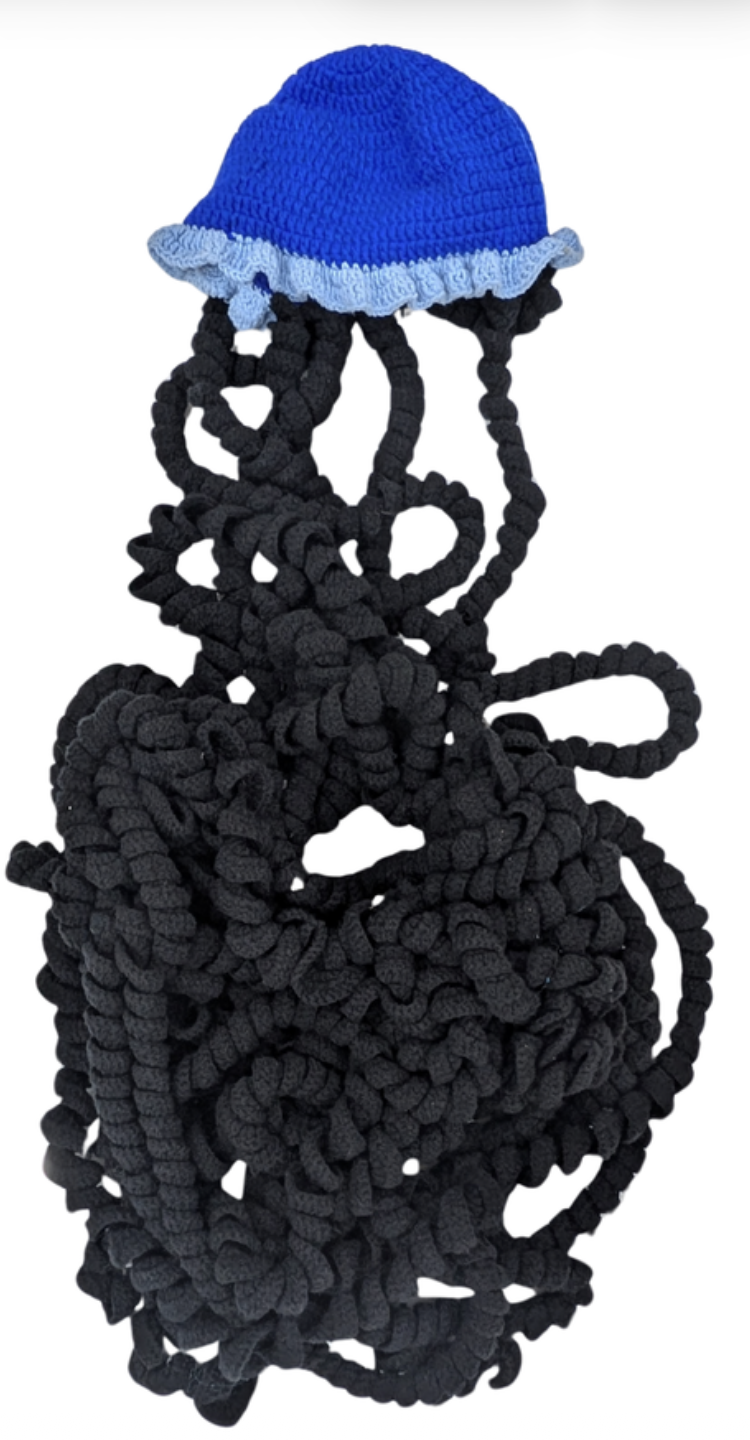
Holding Onto It began with a knit hat Vietnamese parents give their children to mimic long hair, and a childhood memory of wanting one anyway. "I really want to wear it but my parents said that it is for girls only," Tonee says. In the finished piece, a hat sprouts a long, tangled cascade of black yarn hair, made through the traditionally feminine labour of knitting. "There's a saying that goes: Cai rang cai toc la goc con nguoi (Teeth and hair are the roots of humans)," they say. "Long hair gets tangled and messed up, but you are too attached to cut it off, so you hold onto it like a big weight. How much of it am I dragging toward the present and future."
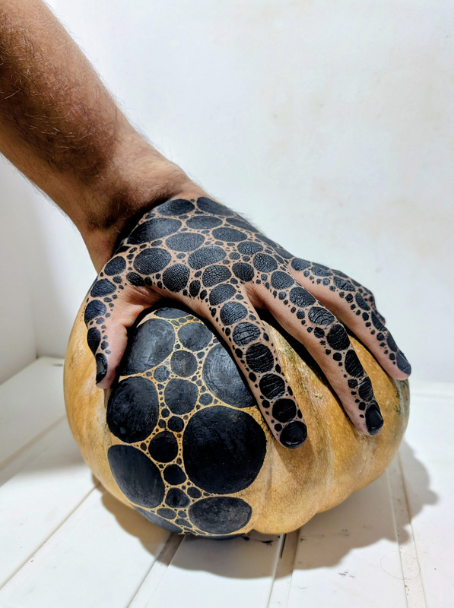
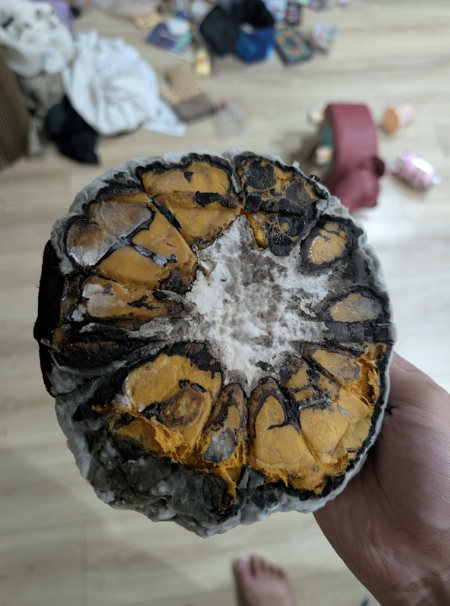
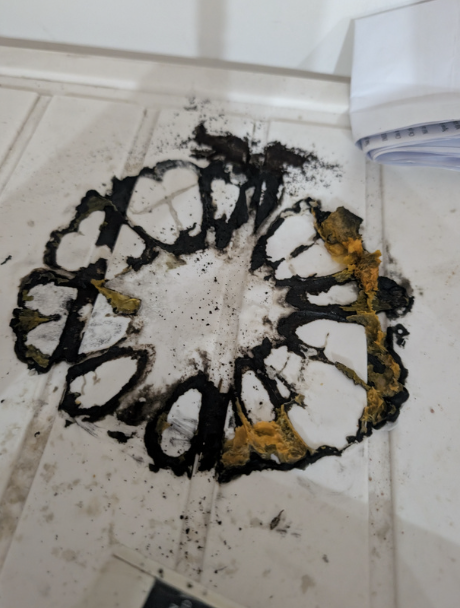
The most temporary work is also the most pointed. In Kusama's Pumpkin, Tonee paints Yayoi Kusama's signature dots onto a real pumpkin, then simply lets it rot. "I have always thought that Kusama's works tend to be too polished and clean, while her topics are very rural: pumpkins, fruit, childhood," they say. "So I aim to make her ideas more literal, a child Kusama picking up a brush and painting on an actual pumpkin harvested from her farm, and then admiring her creation for a few weeks as the fruit slowly melted." What is left, eventually, is only residue on a floor. "Nothing left but stains and inspirations to continue creating."
Outside the gallery, Tonee is a drag queen in Vietnam, a policy researcher, and the owner of seven rescue cats. They describe their practice as one of duration as much as material, the slow, repetitive labour of weaving metal, knitting yarn, or candying coconut, and they would rather teach a room how to manipulate a material than watch it stay untouched. The works, in other words, are meant to keep being made.
Next Artist
Fon Leigh
Fon Leigh Paints the Underground Spring She Wakes Up To Every Morning