Artist Spotlight
Tzeryh Verdadero Paints the Space Between Faith, Trust, and What We Can't Say Out Loud
From a kneeling figure in a ruined shrine to a story about salt and sugar, Tzeryh Verdadero turns devotion, trust, and self-doubt into paintings that ask more than they answer.
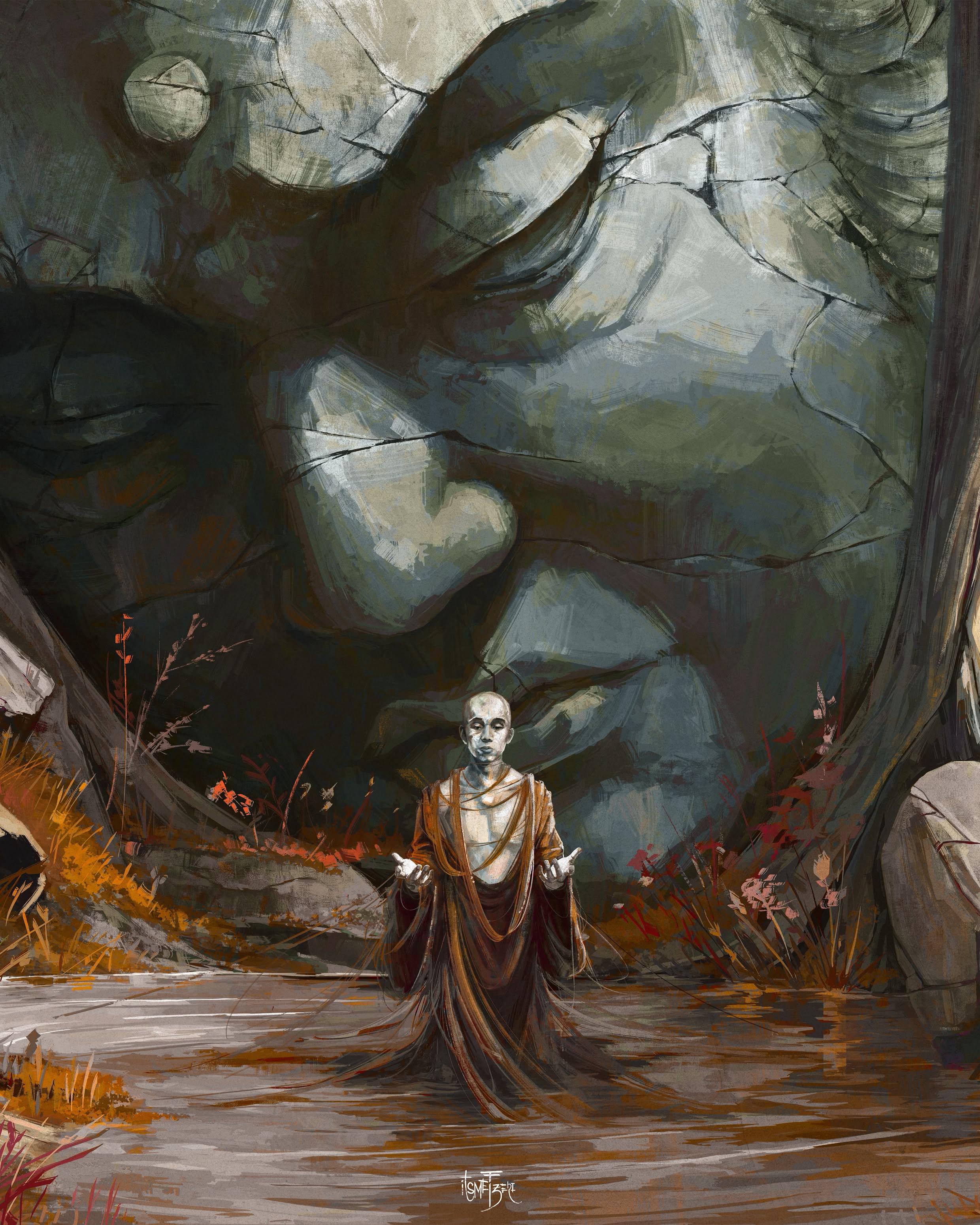
Tzeryh Verdadero makes work in the quiet hours, treating painting less as a job than as a way of paying attention to his own life. He is patient with himself in a way that shows up across everything he makes: unhurried, self-questioning, more interested in sitting with a feeling until it resolves into an image than in forcing one out. That temperament is what gives his paintings their particular register, devotional, a little wounded, always circling back to the gap between what we feel and what we can actually say.
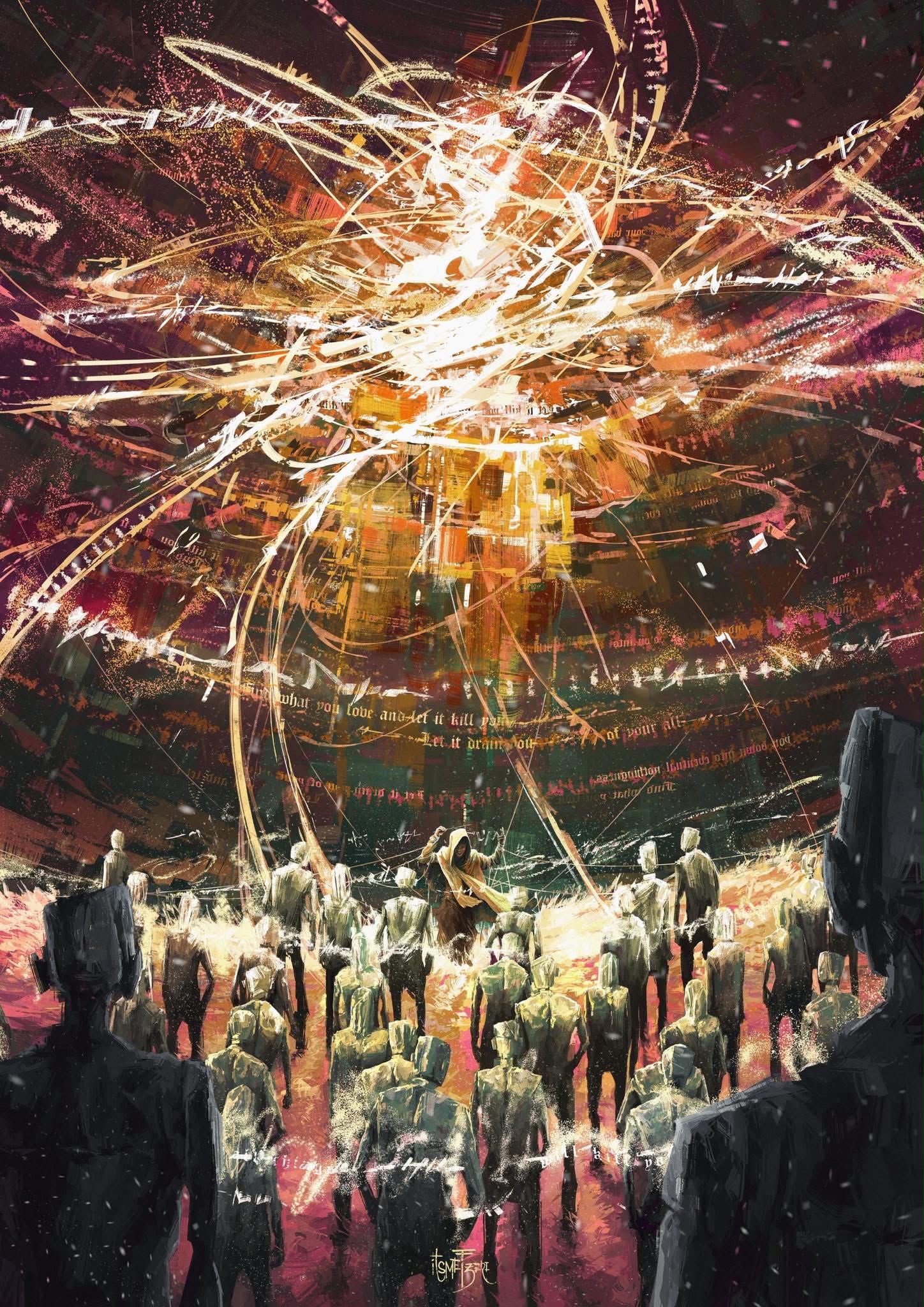
Tzeryh Verdadero's Faith Without a Monument is built around a single, spare image: a figure kneeling in prayer inside the wreckage of what used to hold that prayer up. "On my knees, unheard, unbothered. If not in the ruins built to hold it, where is our God?" reads the line he wrote alongside it. "I wanted to explore the idea that faith isn't tied to a place or a monument," he says. "Even though everything around the figure has fallen into ruin, they're still praying. It's really just asking where faith lives when the things we build around it are gone."
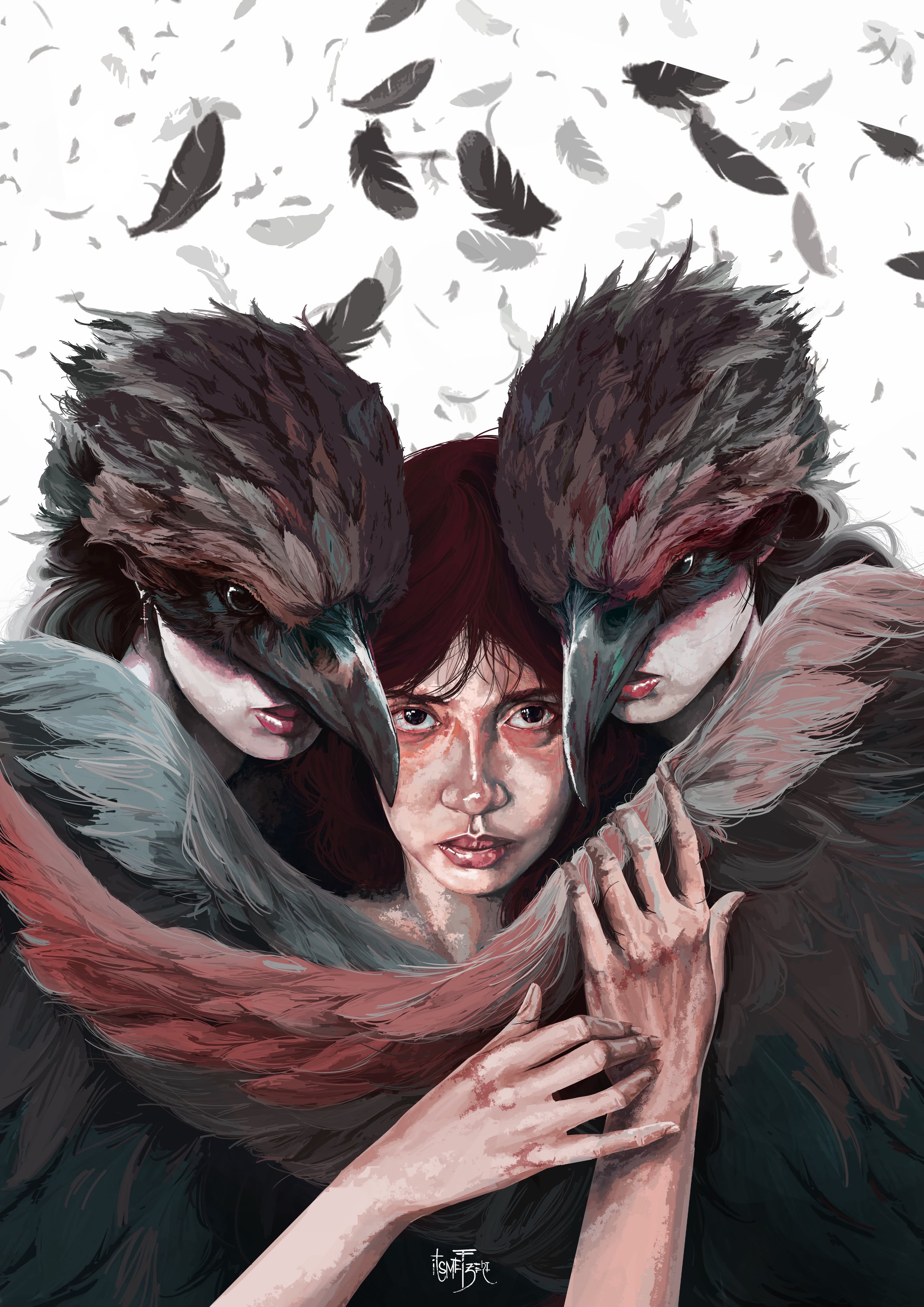
Verdadero returns often to a piece called Salt and Sugar, made around the time he was pushing his own style to evolve. "Always be careful with the people you trust, you can always tell with a glance, even eyes can sing when listened to," he writes in the piece's accompanying text. "But ah, you see, between a smile and a warning, between salt and sugar, I fear even I can't tell the difference." "This piece actually resonated more with me because it was around the time I was trying to push and evolve my art style, so it isn't as layered in meaning as some of my other works," he says. "The idea itself is pretty simple, it explores how people are constantly telling you things, but it's hard to know whether what they're saying is genuine, misleading, helpful, or harmful. That's where the title Salt and Sugar comes from. They can look almost identical, but they're completely different, just like the words people choose to tell us."
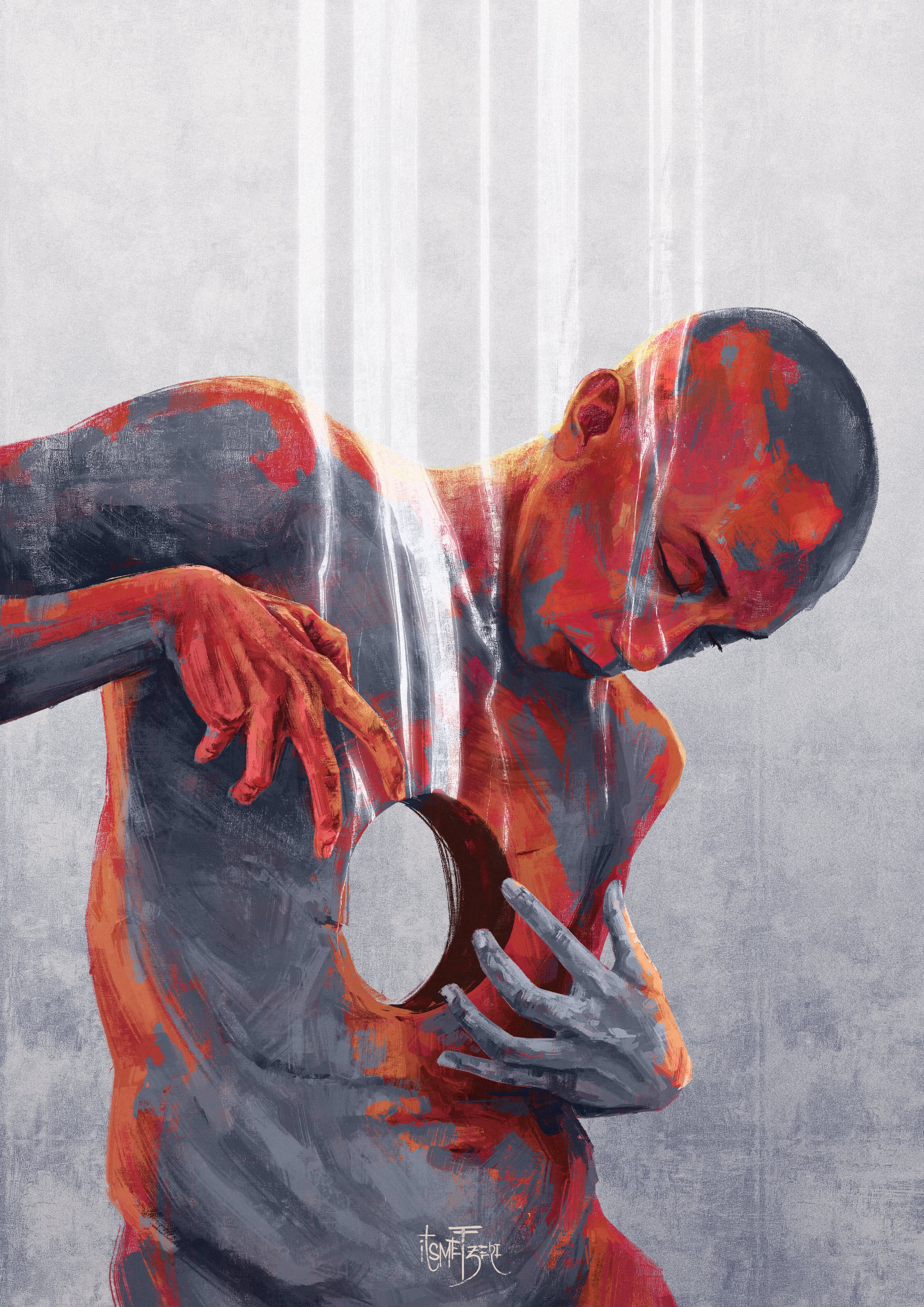
Missing Piece is quieter, and more personal. "Somewhere between who I was and who I was meant to be, I misplaced a piece of myself, and have ached for it ever since," Verdadero writes alongside the painting's reaching, hollowed-out figure. "This piece came from a time when I was still studying architecture," he says. "Even though I was doing well in school, I always felt a little out of touch because the course never really resonated with me the way art did. I had responsibilities, so architecture naturally took up most of my time, and somewhere along the way I stopped drawing completely. That honestly broke my heart. The missing piece represents the part of myself I felt I'd lost during that time."
“I hope people can look at my art and say to themselves, 'I can do that too. I can share my story.'”
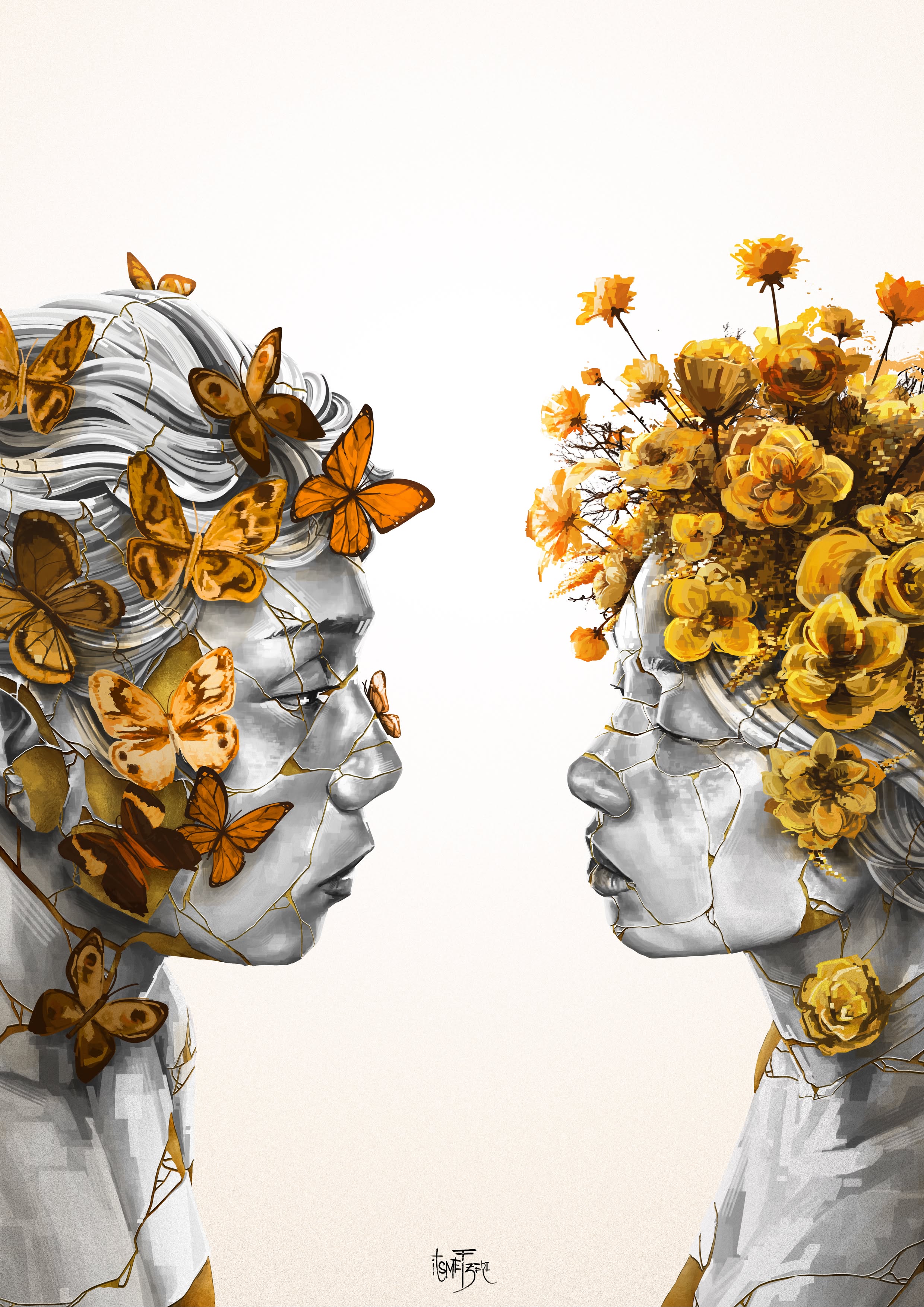
What We Named Love pairs two cracked, statue-like faces, one wreathed in butterflies, the other in flowers, around a longer, more anguished text. "You're a delicate tragedy, aren't you? And you, a thread woven too tightly to breathe?" it begins, moving through lines like "Darling, I've cared for you so deeply, the word love feels like a feeble attempt, to name something far too vast" and "Maybe the peace we sought was never the same shape." "This piece is about how two people can love each other deeply but still see love differently," Verdadero explains. "The cracks represent the baggage and imperfections we all carry, while the butterflies and flowers came from the idea that butterflies are naturally drawn to flowers. They need each other in a way, I wanted that to reflect how two people can feel like they belong together, yet still struggle to understand each other. That's why I called it What We Named Love, because sometimes we use the same word, but we don't always mean the same thing."
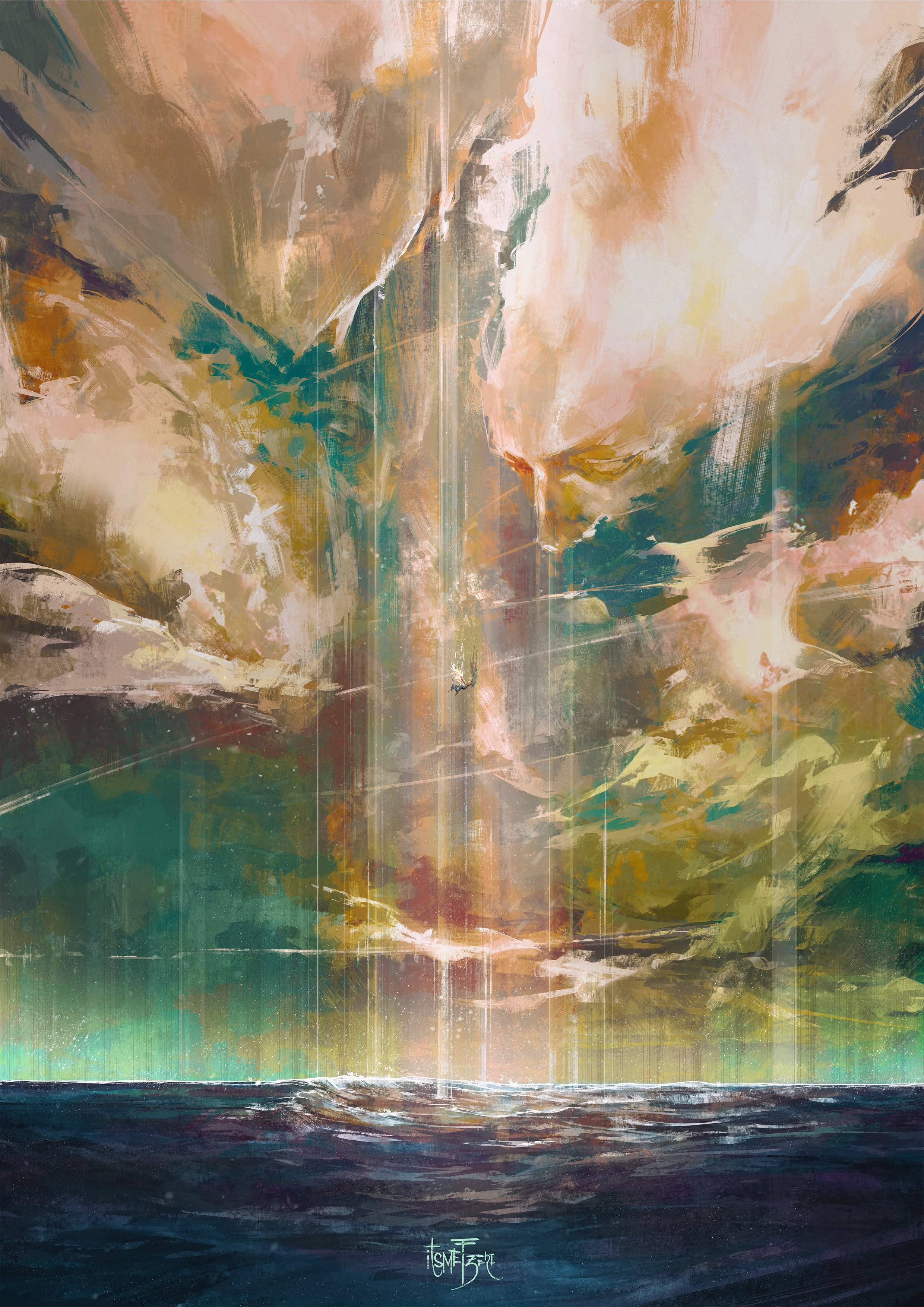
Asked which of his works carries the most story, Verdadero points first to something still unfinished. "I'd say my work with the most story behind it would be my latest, however unfortunately I haven't finished it yet," he says. "Besides that, I would think it would probably be my Ad Altiora artwork, an artwork about Icarus and how I depicted it quite differently than how it was originally portrayed."
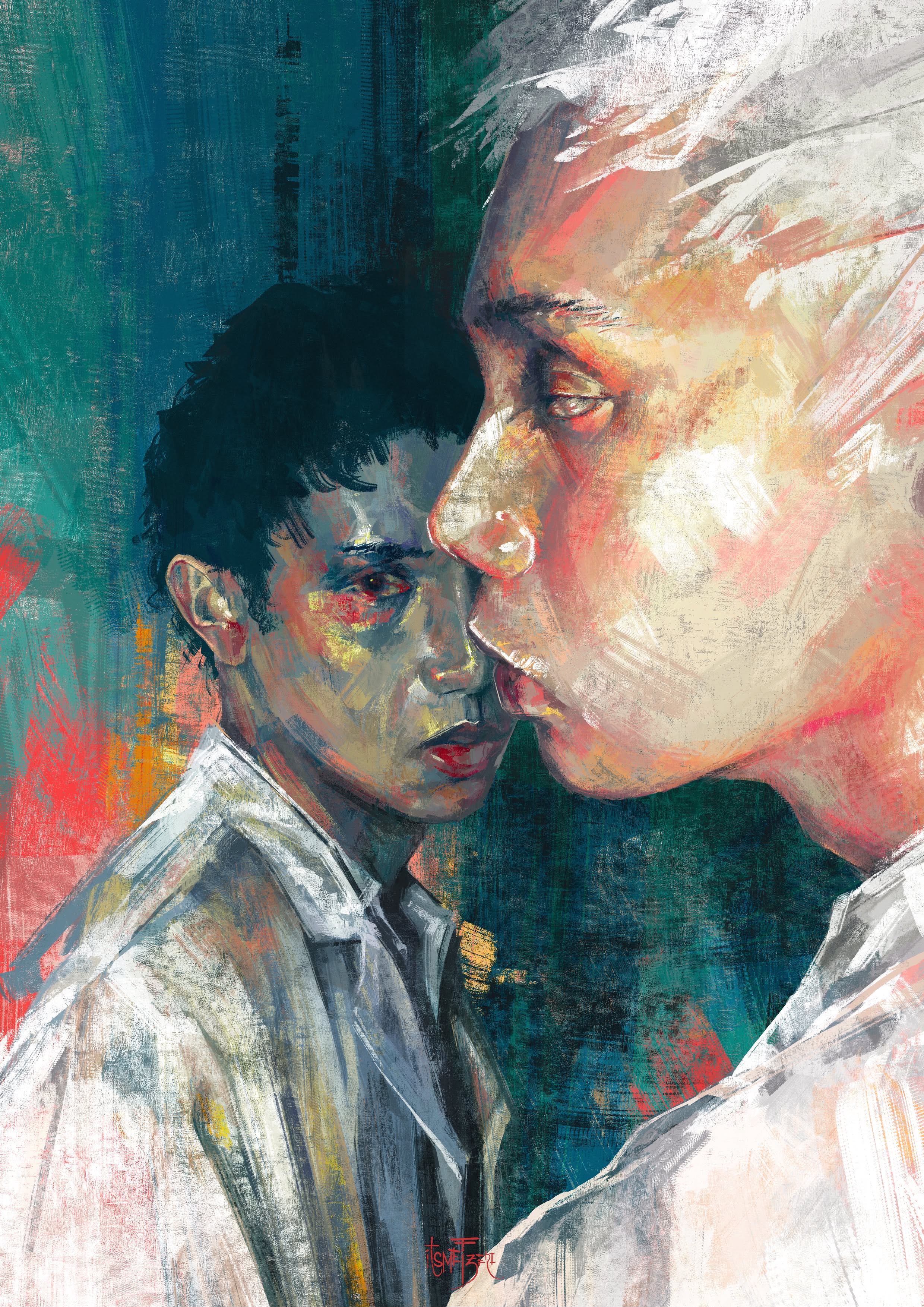
He is unusually at peace with creative block, treating it less as an obstacle than as instruction. "I rarely get creative blocks, mostly because I believe creative block is just our minds' and bodies' way of telling us to recoup and think harder about the next piece," he says. "I think it's an essential part of the creative process." That patience is rooted in where he thinks inspiration actually comes from. "Most of the inspiration I get comes from the things surrounding me. I like the idea of sitting down and just breathing in life, getting inspiration from everywhere. Though I am more biased toward music, I find the idea of sound really inspiring. It gets me in the mood and puts my heart in the right place."
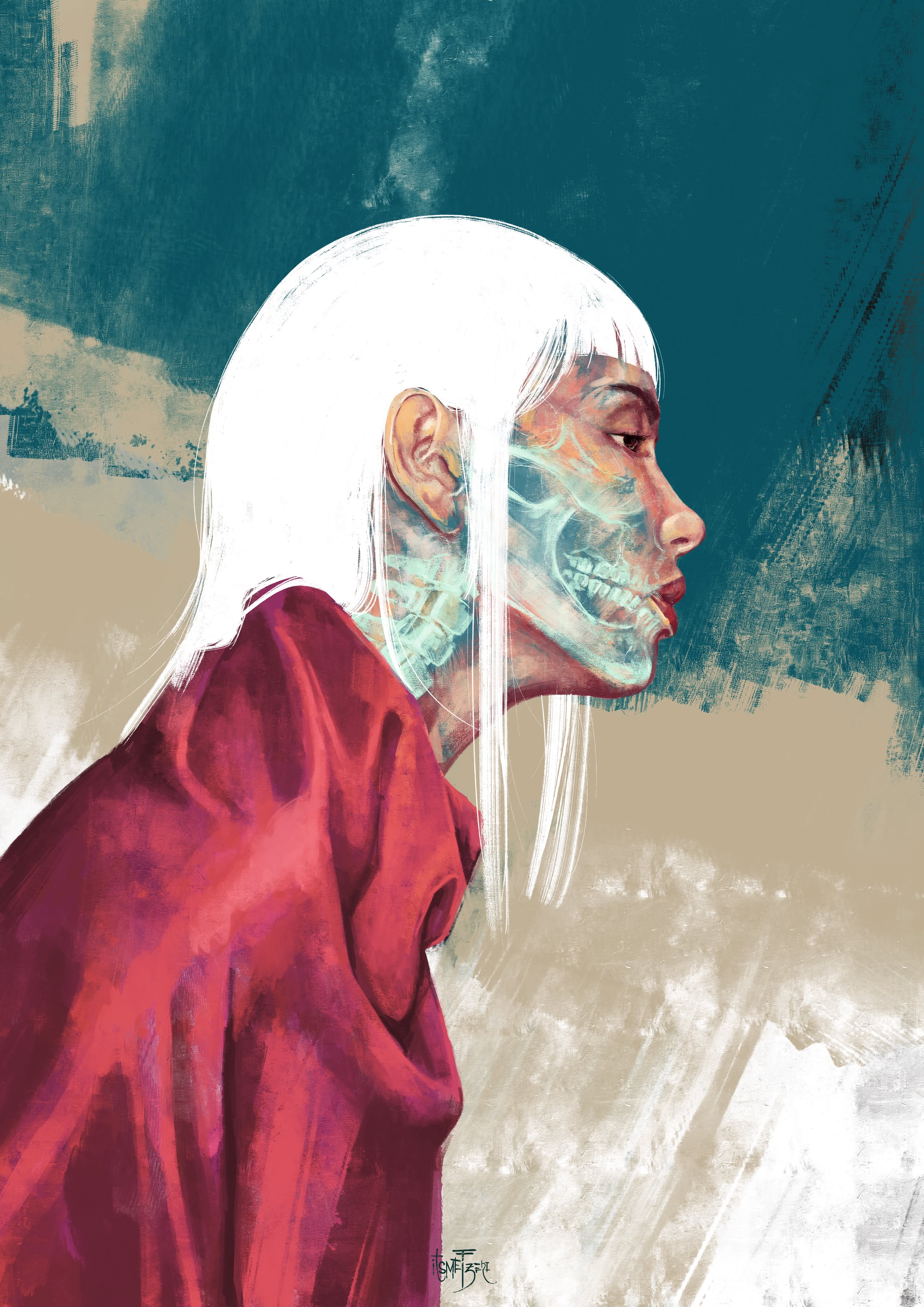
The response to his work, he admits, still catches him off guard. "In all honesty, I feel shy, actually," he says. "I'm really happy, and I appreciate the people who enjoy my art, but it can be quite overwhelming at times because, well... I made these artworks for myself, and people actually like them?! Like, wow. What a time to be alive." What he hopes it does for others matters more to him than the attention itself. "I hope I bring inspiration to others, not necessarily to start making art, but rather to share their own story, whatever medium they choose," he says. "I hope people can look at my art and say to themselves, 'I can do that too. I can share my story.'"
Next Artist
Nguyen Minh Tri (Tonee)
Counting the Rings: Nguyen Minh Tri on Grief, Drag, and Making Art From the Body